


When choosing a mobility scooter or electric wheelchair, the battery is the heart of your machine. One of the most important decisions you will make is whether to replace your existing unit with a traditional Sealed Lead Acid (SLA) battery or upgrade to a modern Lithium-ion battery.
Both types power thousands of mobility machines across the UK, but they differ significantly in weight, performance, cost, and lifespan. This guide explains the differences so you can make the right choice for your lifestyle.
Quick Summary: Which Battery Do I Need?
- SLA (Sealed Lead Acid): Best for budget-conscious users and heavy-duty road scooters where weight is not an issue.
- Lithium-ion: Best for travel scooters, frequent travelers (airline approved), and users who need a lightweight battery that charges fast.
- Compatibility: Most modern mobility scooters and powerchairs can be upgraded to Lithium.
What are SLA Batteries?
Sealed Lead Acid (SLA) batteries have been the standard in mobility equipment for decades. They are reliable, affordable, and widely available. SLA batteries typically come in 12V blocks, usually paired to provide the 24V system needed by most scooters and wheelchairs.
While they are heavier than modern alternatives, they rely on proven technology that handles high power demands well.
Key Benefits:
- Lower upfront cost.
- Widely available replacements (Fits most standard battery boxes).
- Stable and safe for all terrain types.
Drawbacks:
- Heavy: Adds significant weight to your scooter.
- Shorter Lifespan: Generally lasts fewer cycles than lithium.
Browse our range of Reliable SLA Batteries
What are Lithium Batteries?
Lithium-ion (Li-ion) batteries are newer, significantly lighter, and increasingly used in portable and folding mobility scooters. They use advanced chemistry to provide more power in a fraction of the size.
Many airlines accept lithium batteries (subject to Wh ratings), making them the only real choice for travel scooters.
Key Benefits:
- Featherweight: Up to 75% lighter than SLA equivalents.
- Longevity: Typically lasts ~1,000 charge cycles (vs ~300 for SLA).
- Rapid Charging: Get back on the road faster.
Drawbacks:
- Higher upfront investment.
- Must be genuine and safety-certified for airline travel.
Upgrade your ride with Lightweight Lithium Batteries
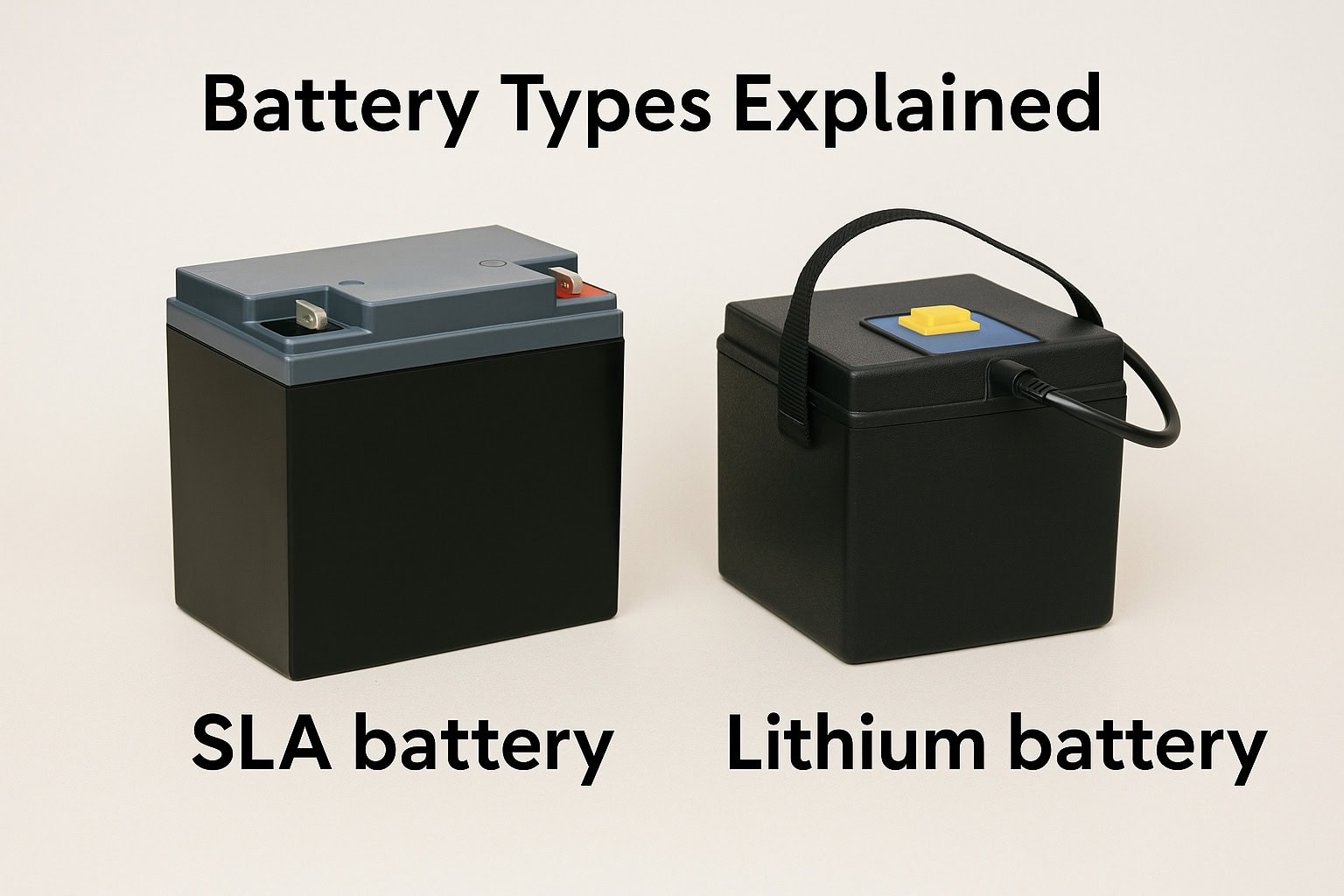
Comparison: SLA vs Lithium
| Feature | SLA (Lead Acid) | Lithium-ion |
|---|---|---|
| Weight | Heavy – difficult to lift | Very light – easy to transport |
| Cost | Lower initial price | Higher initial cost |
| Lifespan | ~300 charge cycles | ~1,000 charge cycles |
| Airline Friendly | No | Yes (Check IATA limits) |
Mobility Machines Recommendation: How to Choose
For Travel & Folding Scooters:
Lithium is essential. The weight saving makes lifting the scooter into a car boot manageable, and it is required for air travel.
For Large Road Scooters (Class 3):
SLA is often sufficient. Since you rarely lift these batteries out of the scooter, the extra weight helps with traction, and the lower cost makes replacement cheaper.
For Frequent Daily Users:
Lithium offers better value. Although it costs more today, the longer lifespan (1,000 cycles) means you won’t need to replace it as often as an SLA battery.
Expert Tips: How to Care for Your Battery
- Charge regularly: Never let your battery fully discharge (go to 0%) if you can avoid it.
- Winter Storage: If storing your scooter for winter, charge the battery fully and top it up once a month.
- Use the Correct Charger: Lithium batteries require specific chargers; never use a Lead Acid charger on a Lithium battery.
Need Help Finding the Right Battery?
Choosing between SLA and Lithium depends on your specific model and budget. If you are unsure if your scooter is compatible with Lithium, we can help.
Contact our Team or call 0203 916 5492 for expert advice.